Lorenzo Dalla RosaAerospace Engineer, MSc

CFD · FEA · Composites

Ciao!

LorenzoDalla Rosa

Aerospace Engineer, MSc

Pisa, Italy
Sant'Anna School of Advanced Studies / University of Pisa

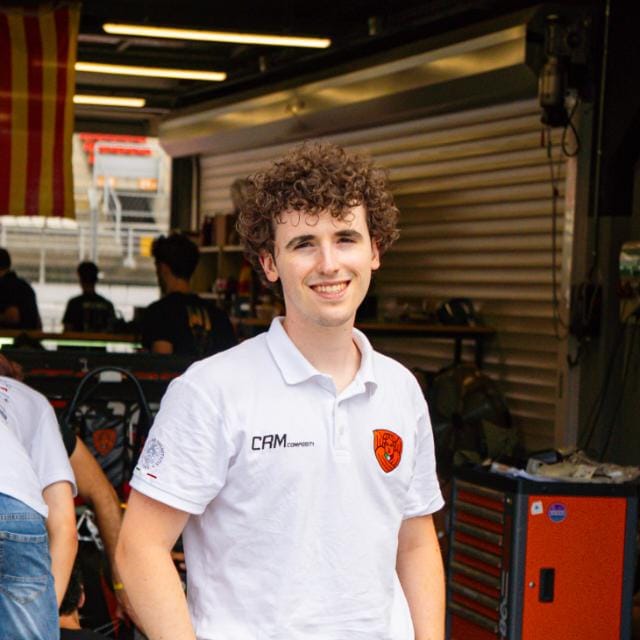
Portrait of Lorenzo Dalla Rosa

Projects › ET-18

No.02 CFD / Star-CCM+ / Formula Student

E-Team Squadra Corse

ET-18

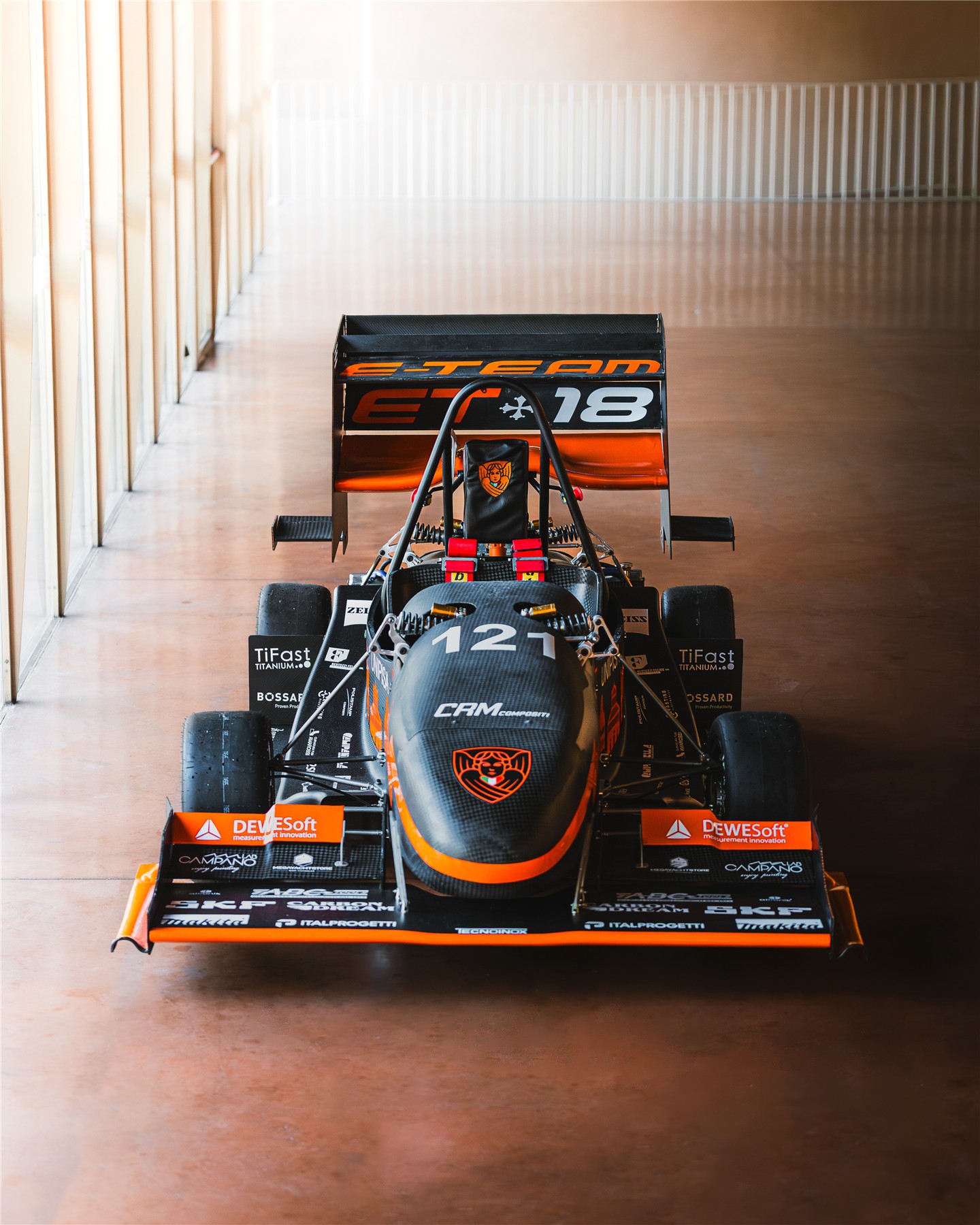
Aerodynamic development of E-Team Squadra Corse's ET-18.

E-Team Squadra Corse ET-18
E-Team Squadra Corse ET-18 ET-18
Role
Head of Aerodynamics
Year
2025
Downforce
+13.5%
Efficiency
+16%
Track score
+7.3%
Package weight
−8%
Competitions
FS Spain, FS Alpe Adria, FSATA

Aerodynamic development of the E-Team Squadra Corse Formula Student car, first as CFD Engineer and then as Head of Aerodynamics.

01Cornering simulations

Set up cornering simulations with a rotating circular domain in Star-CCM+, enabling more realistic modelling of the airflow during the skidpad.

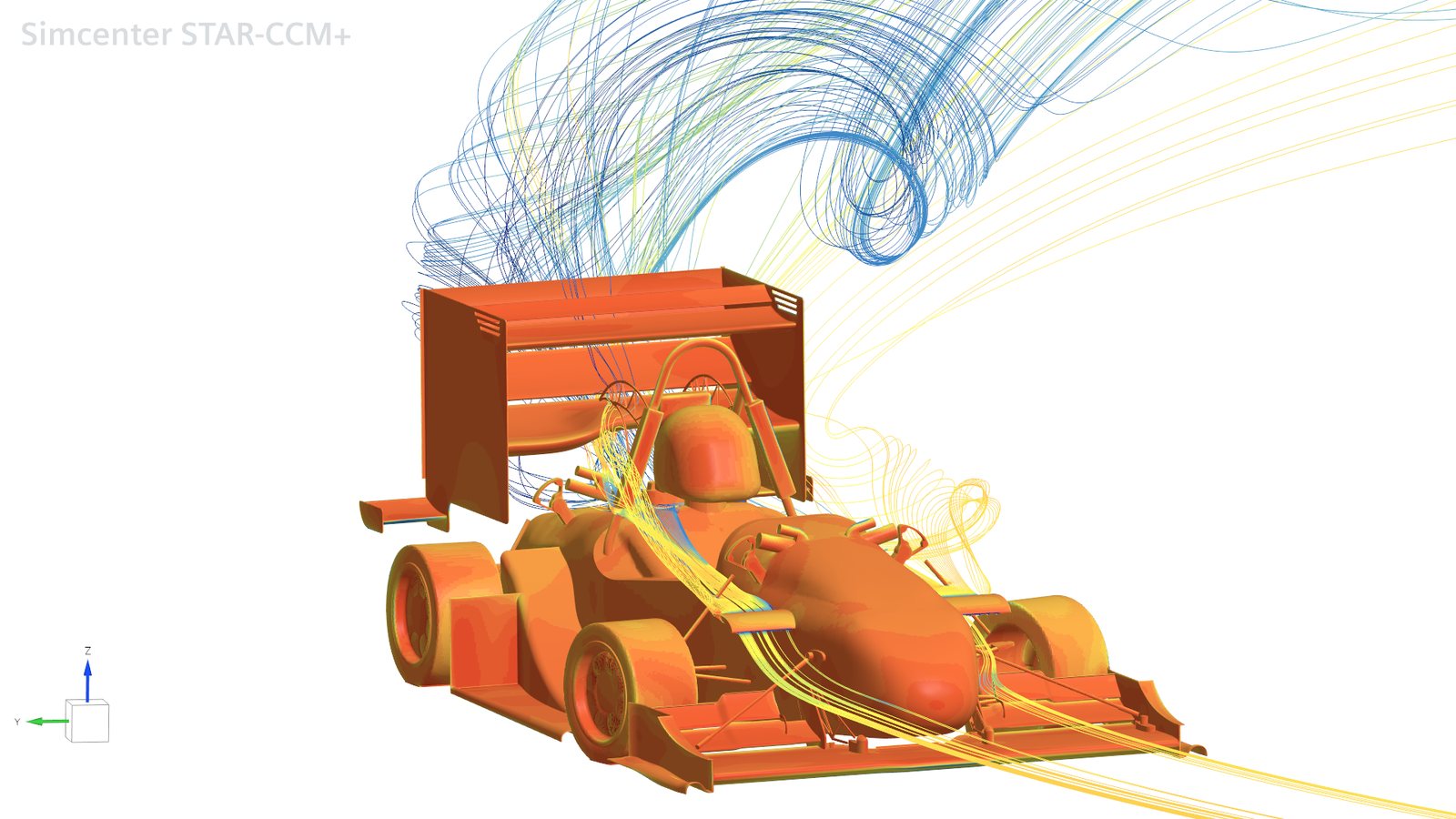
Streamlines around the car in the rotating cornering domain (Star-CCM+)
02Validation in the wind tunnel and on track
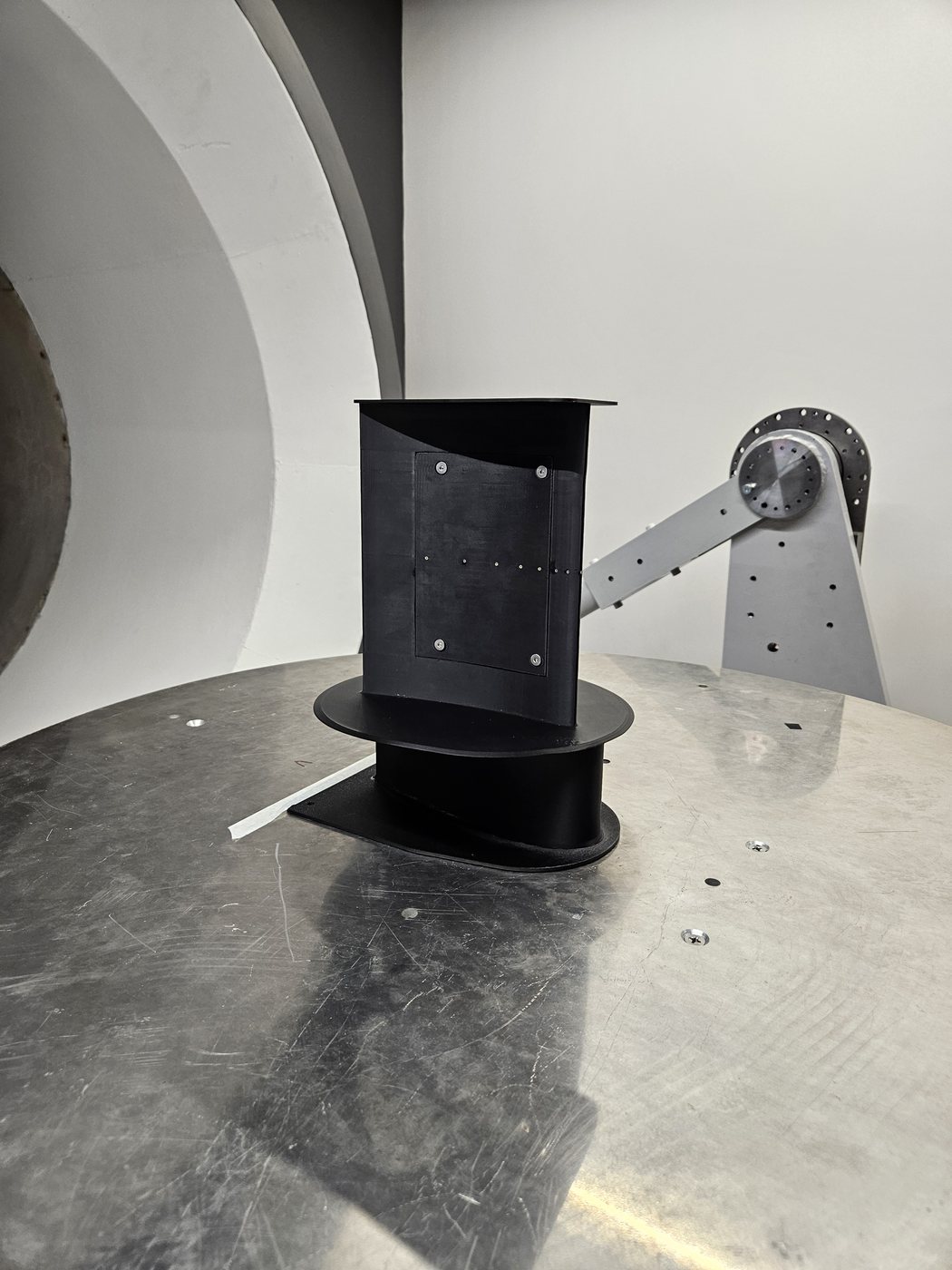
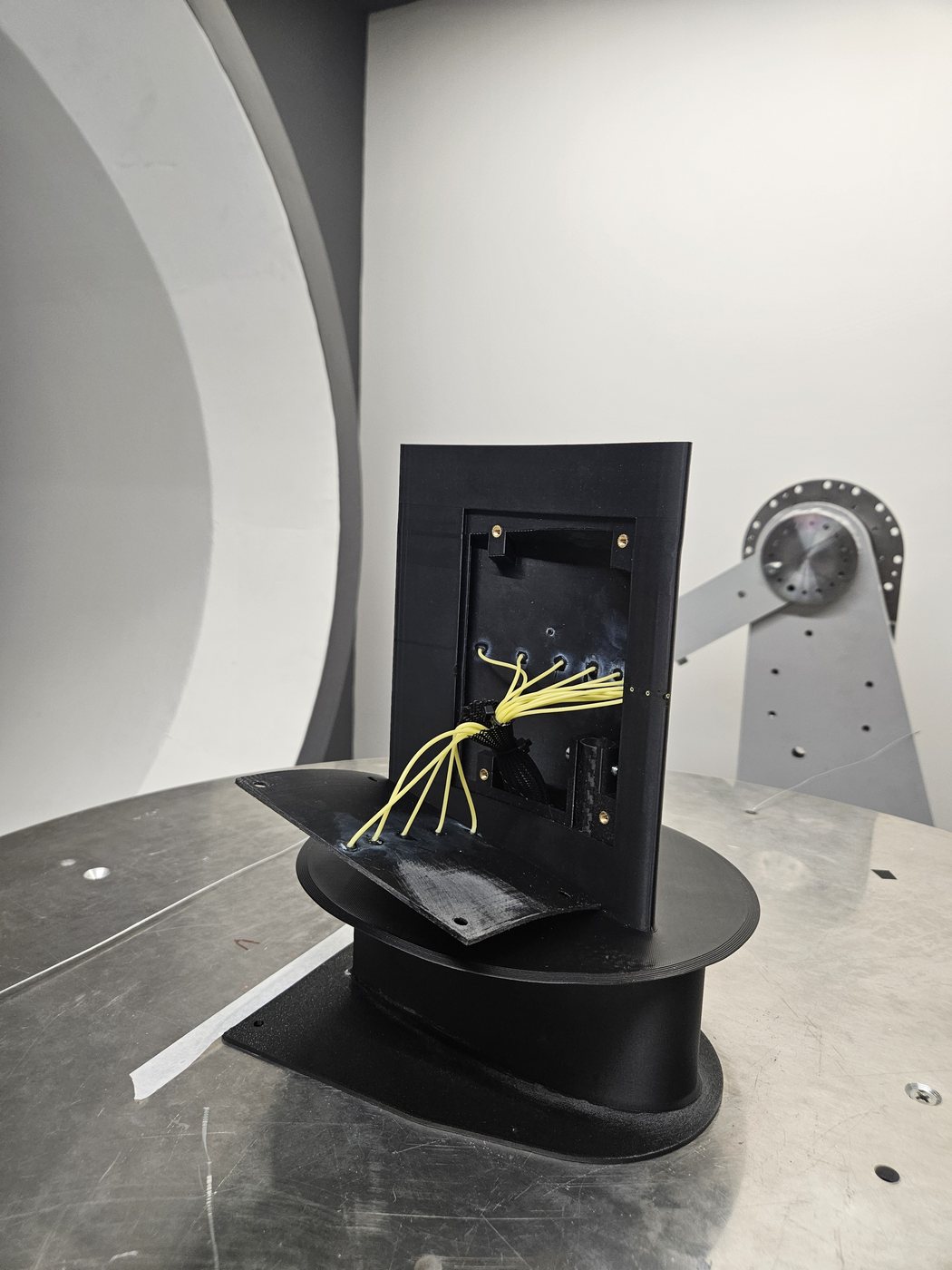
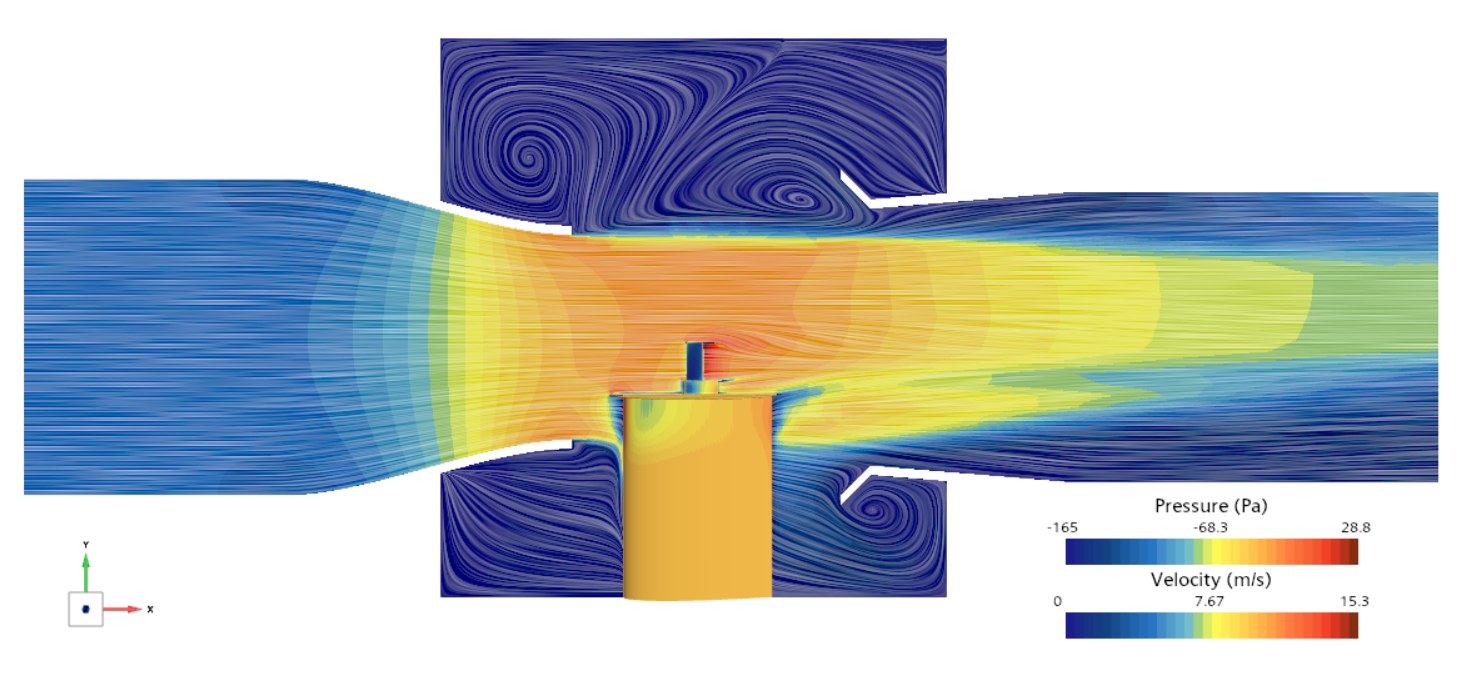
  • Independently validated CFD results against wind tunnel data: designed the test model, ran the trials and performed statistical signal analysis on time-series sensor data in Python.
  • On-track pushrod extensometry for experimental validation.
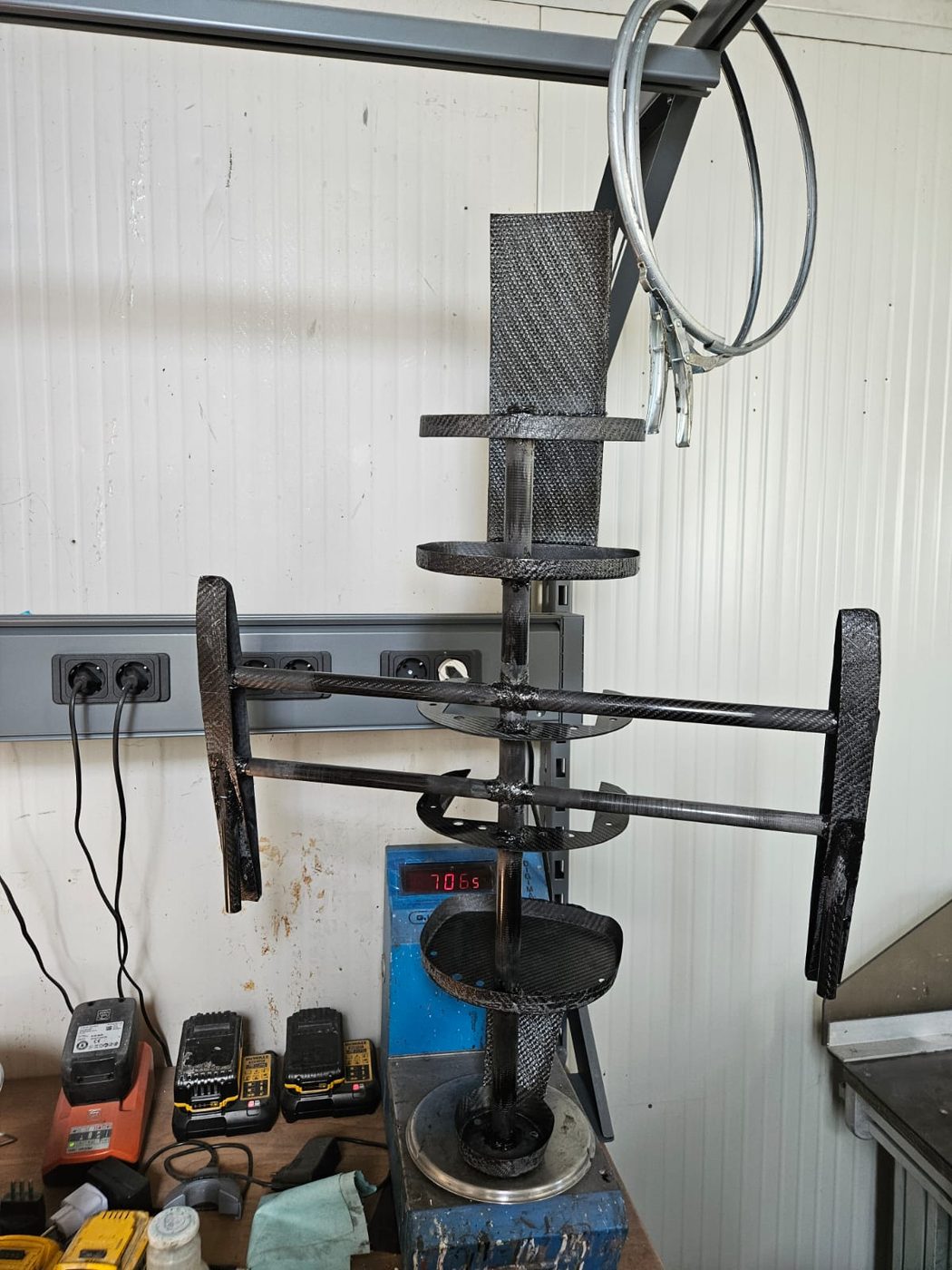
Test model mounted in the wind tunnel
Test model open, with the pressure tap lines
The same test simulated in the wind tunnel section (Star-CCM+)
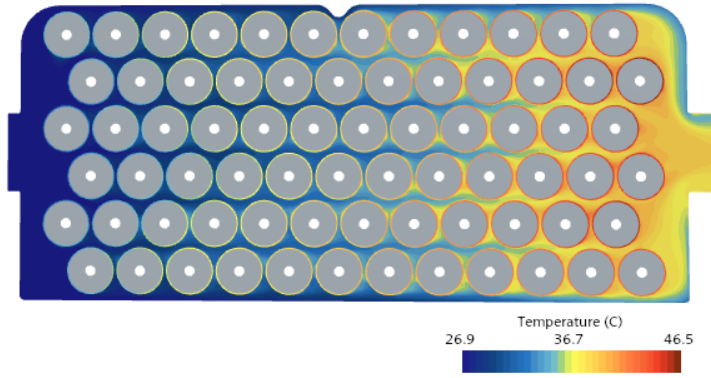
03Battery cooling (CFD/CHT)

Pioneered the team's first CFD/CHT battery cooling simulations, lowering steady-state peak temperatures by 15 °C.

Cell temperatures across a module section in the redesigned layout (CHT)
04Simulation architecture and automation
  • Optimised the simulation architecture, cutting standard deviation 10-fold while lowering cell count.
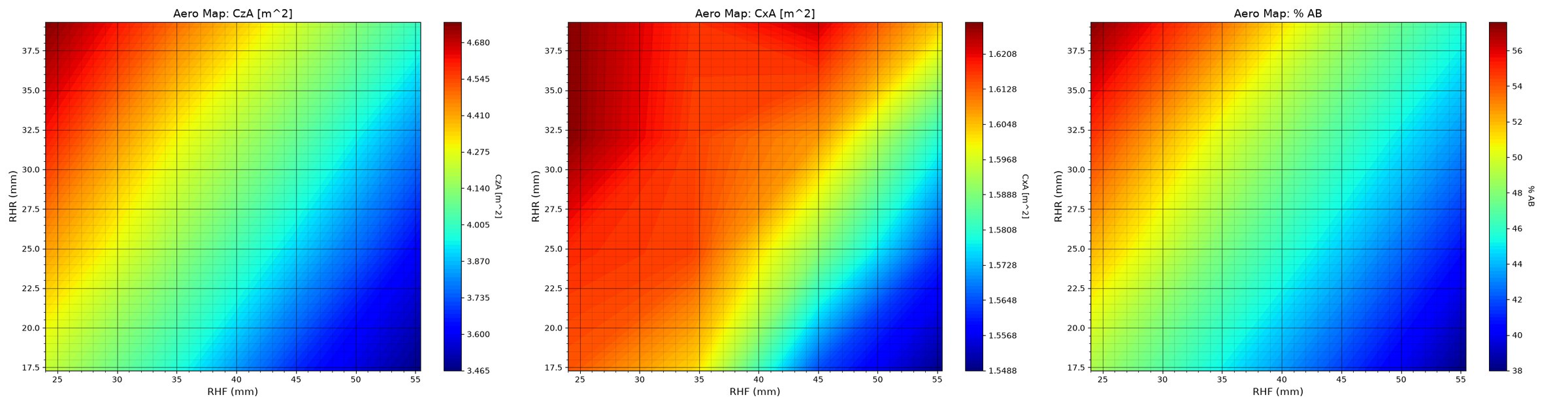
  • Automated volume meshing and aerodynamic map generation pipelines.
Aero maps over front and rear ride height: CzA, CxA and aero balance
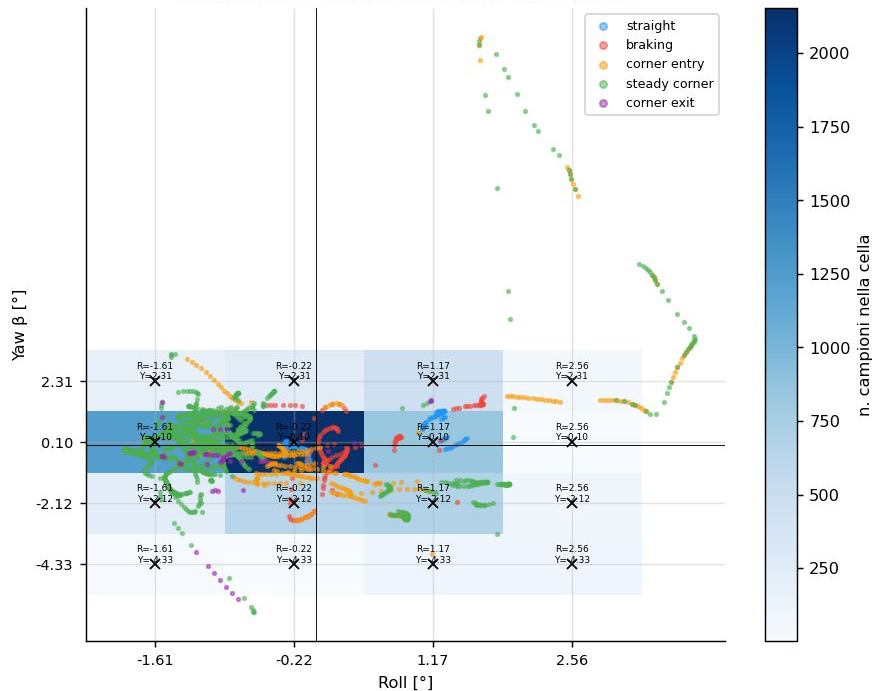
Range extraction: 4×4 roll and yaw grid of CFD points over the on-track samples, by manoeuvre
05Reduced-order model

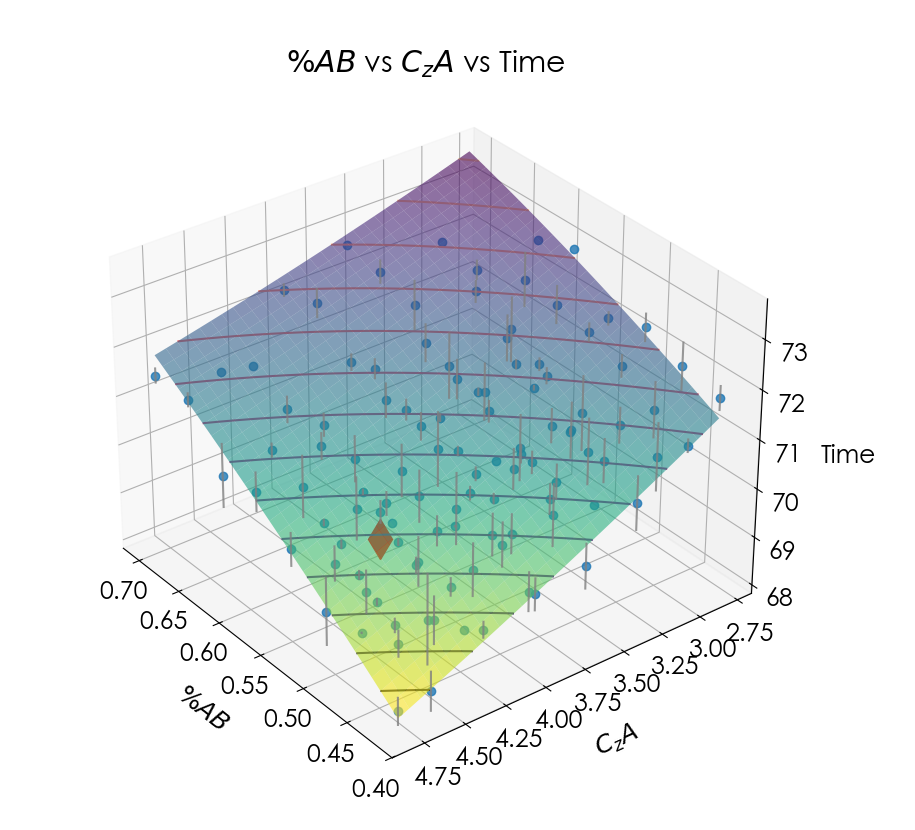
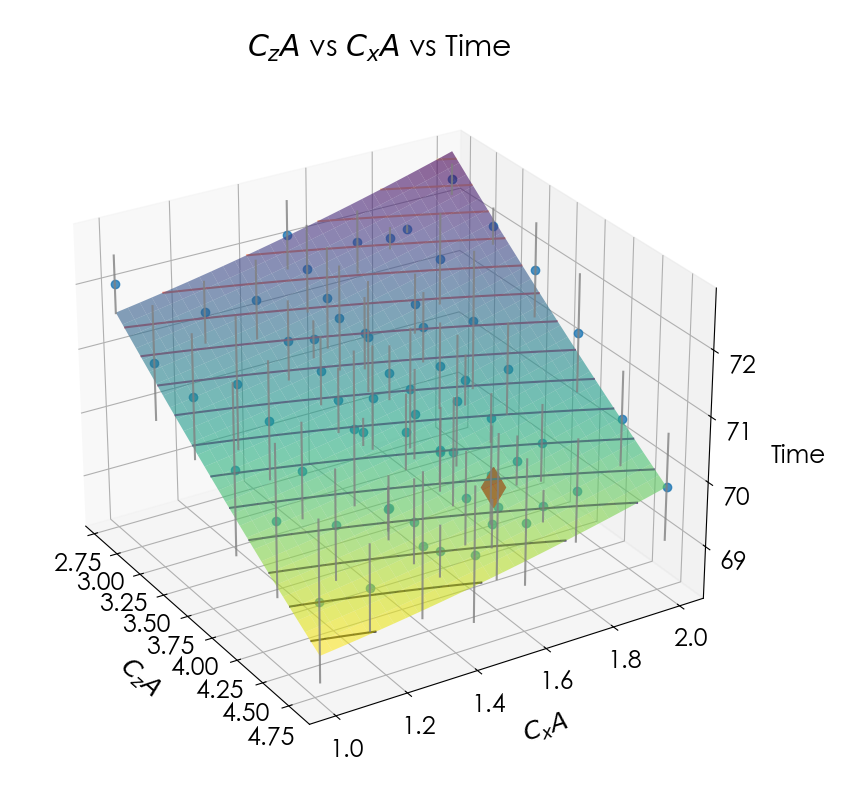
The car's performance is a balance between downforce, aero balance and drag, so no single coefficient can rank two designs. I developed a coupled aero-vehicle dynamics Reduced Order Model that predicts the on-track score variation from simulation data, and used it to qualify each aerodynamic design and to quantify the gains of the new package.

Reduced-order model: lap time against aero balance and CzA
Reduced-order model: lap time against CzA and CxA
06Composite manufacturing
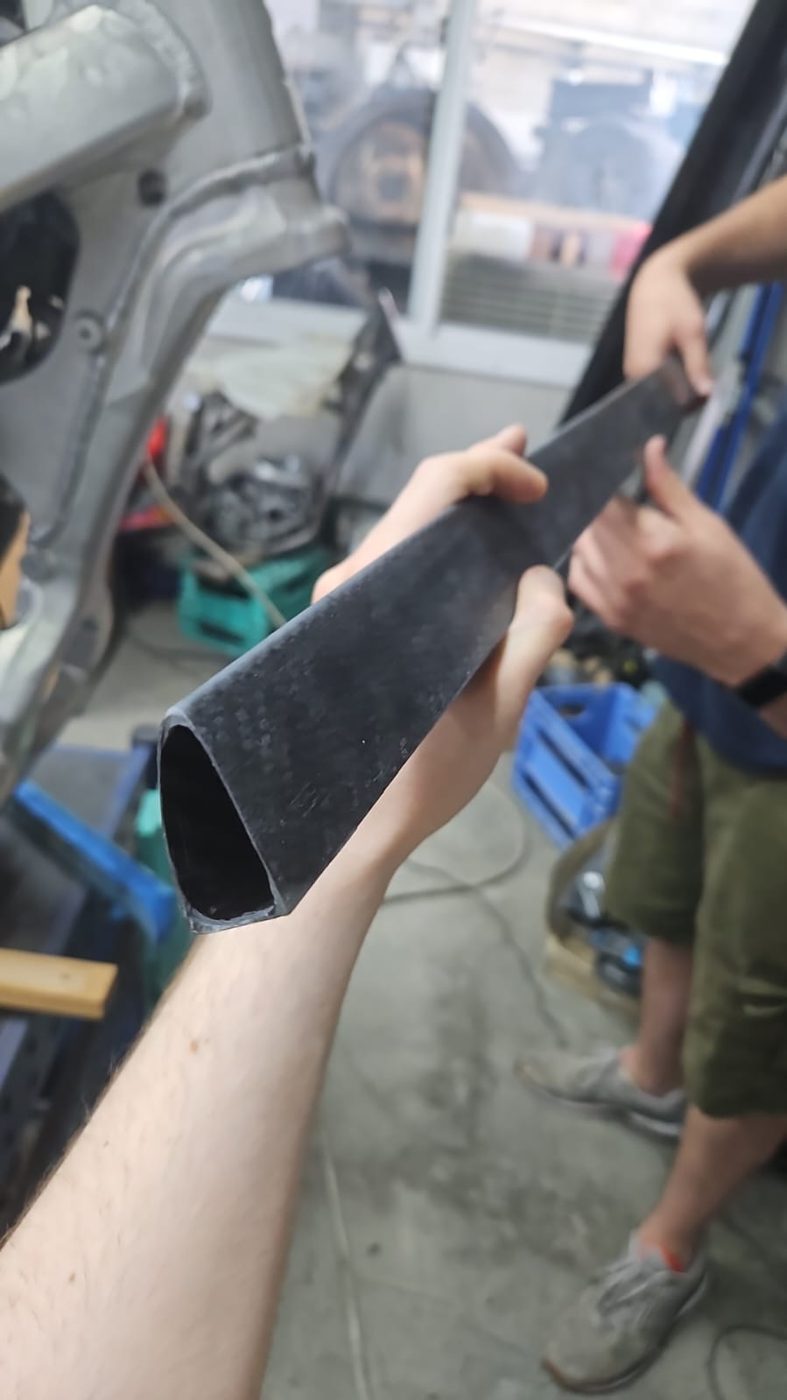
  • Led end-to-end composite manufacturing (mould tooling, carbon-fibre layup, curing), cutting package weight by 8%.
  • Managed the aerodynamics division's transition from SolidWorks to Siemens NX, and set up ply-book generation in Fibersim.
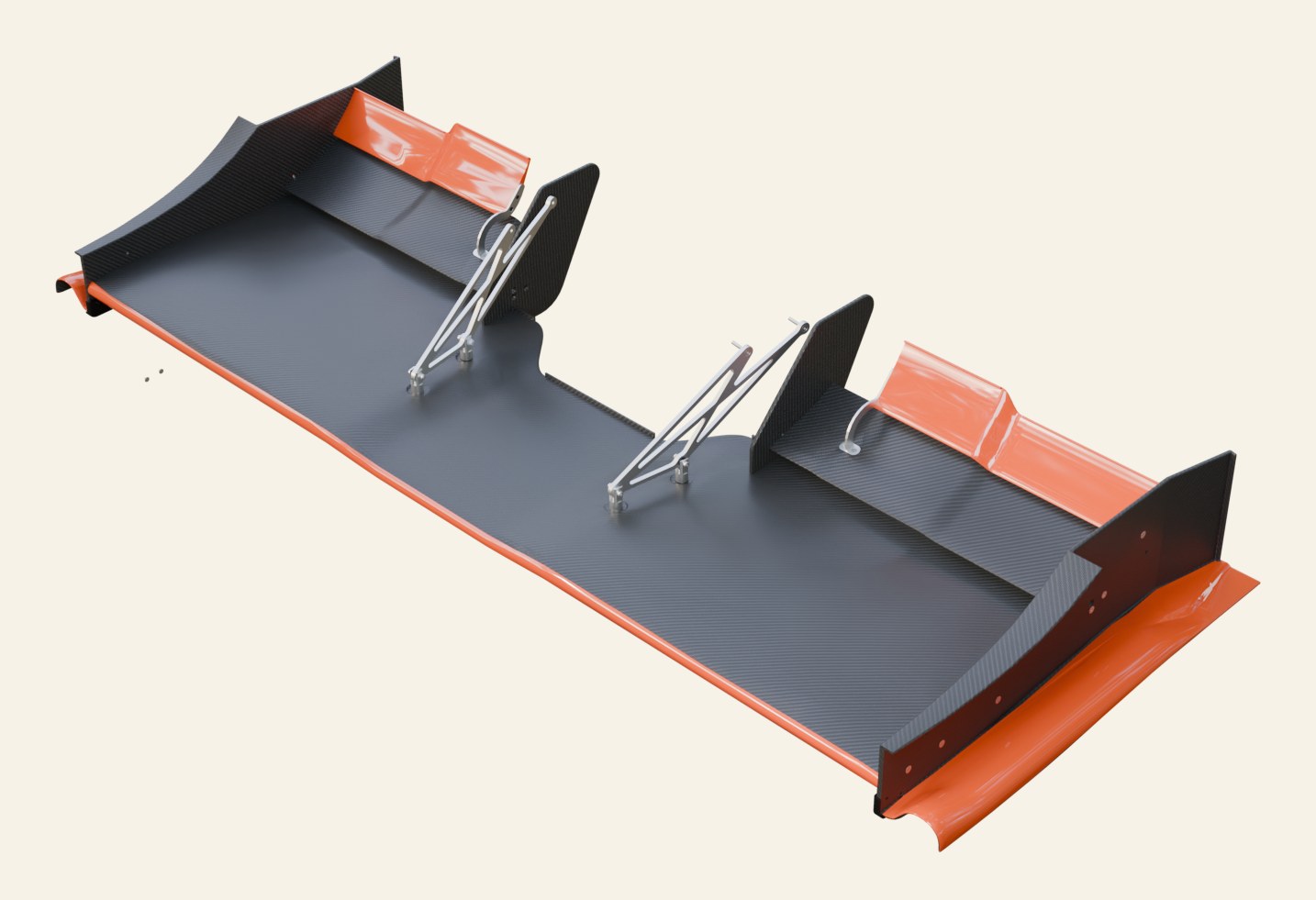
Rendering of the 2026 front wing

Projects › Caelus

No.03 Autonomous UAVs / Composites / Aerodynamics

Caelus

Two autonomous fixed-wing UAVs designed, built and flown by a ten-person student team for the IMechE UAS Challenge (UK), in 2024 and 2025.

Projects › Caelus › ONE:1

No.03.1 UAV / Aerodynamics / Carbon Fibre

Caelus Sant'Anna

ONE:1

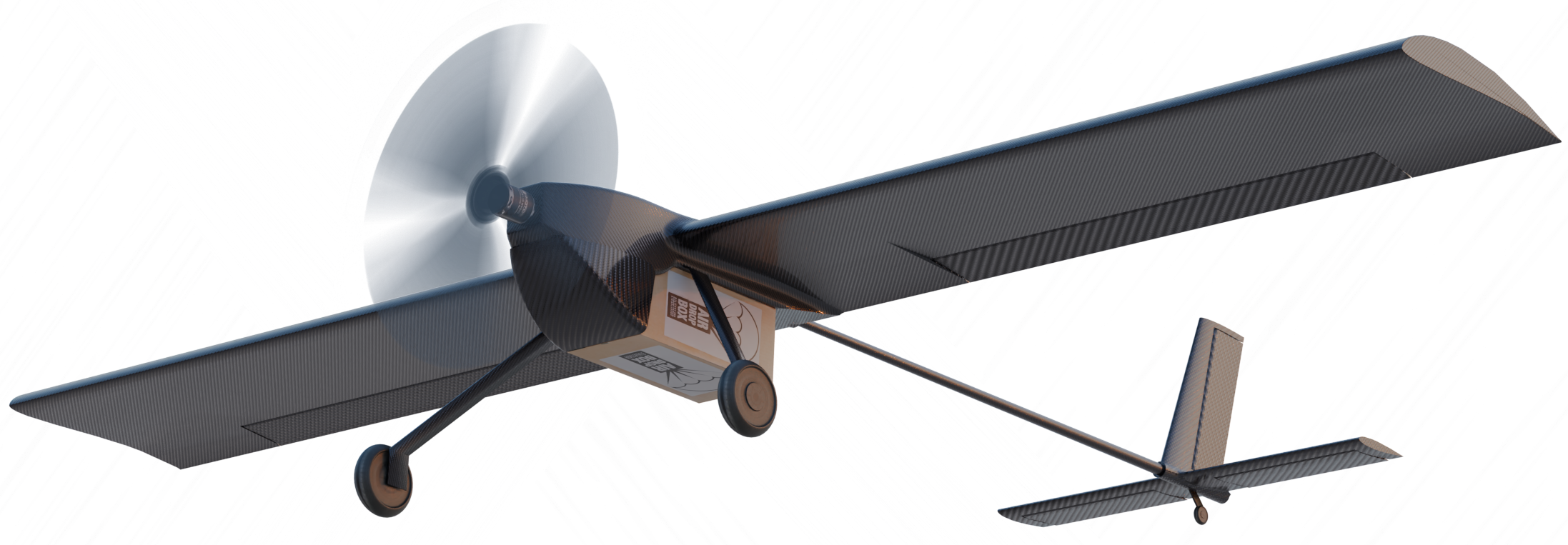
A fully autonomous, carbon-fibre fixed-wing UAV built from scratch by a ten-person student team for the IMechE UAS Challenge.
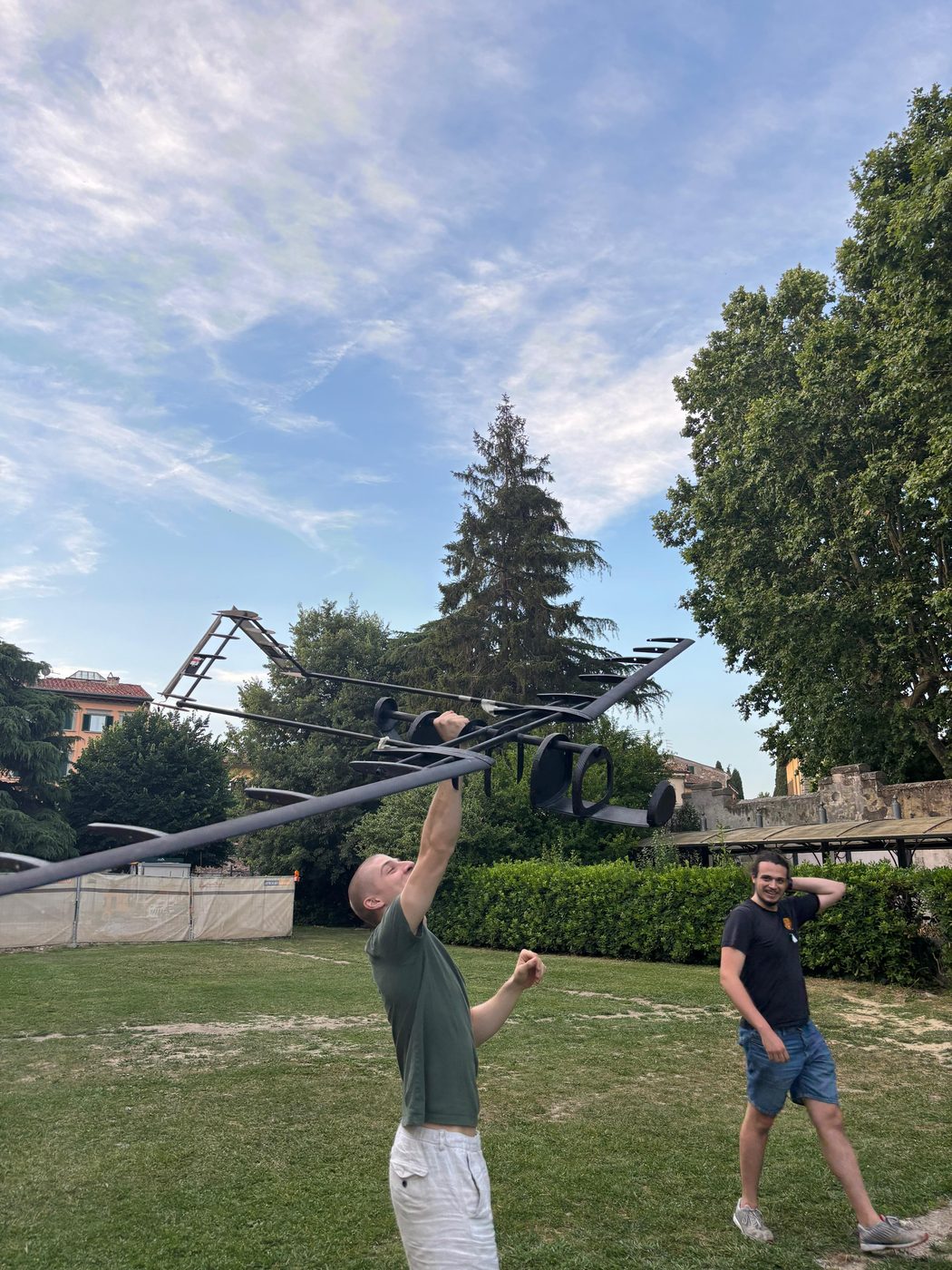
Caelus ONE:1 - Autonomous Fixed-Wing UAV ONE:1
Role
Fixed-wing co-founder and lead operations engineer
Year
2024
Team
10 people
Competition
IMechE UAS Challenge (UK)
Payload to aircraft weight
1:1 (8 kg / 8 kg)
Autopilot
PX4

Design, manufacturing and testing of a fully autonomous fixed-wing UAV for the IMechE UAS Challenge (UK), by a new ten-person student team. In a small team I balanced structural and aerodynamic design with supply chain management and sponsorships, under strict deadlines where any mistake ends in a crash.

01Aerodynamic layout and payload fairing
  • Innovative aerodynamic layout: the payload sits outside the main fuselage, with a moving fairing that retracts after the drop.
02Carbon-fibre monocoque
  • Full carbon-fibre monocoque: an 8 kg aircraft that carries 8 kg of payload, with short take-off and landing.
Projects › Caelus › Baff-1

No.03.2 UAV / Aerodynamics / Composites

Caelus Sant'Anna

Baff-1

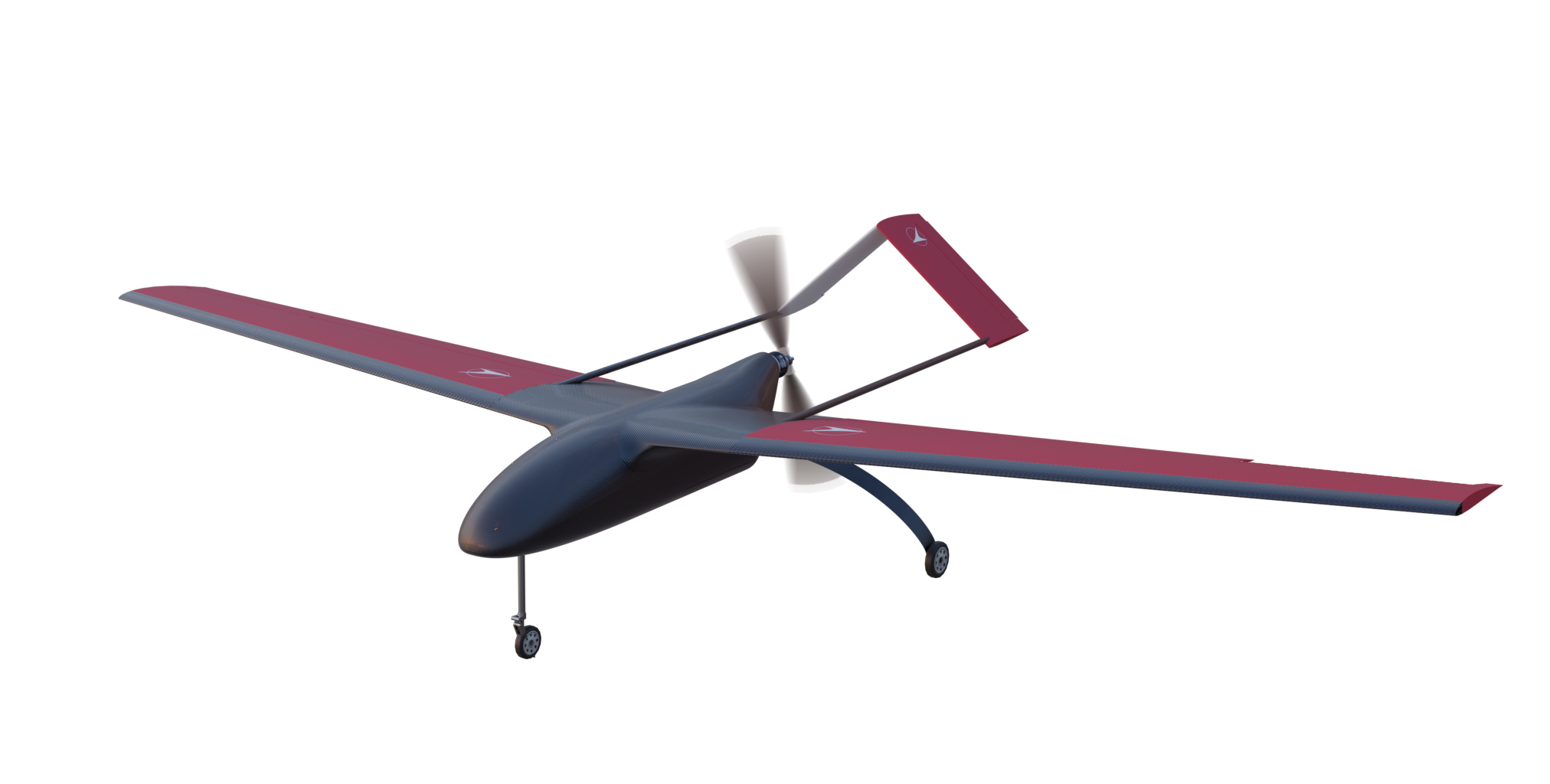
Second-generation IMechE UAS Challenge aircraft.

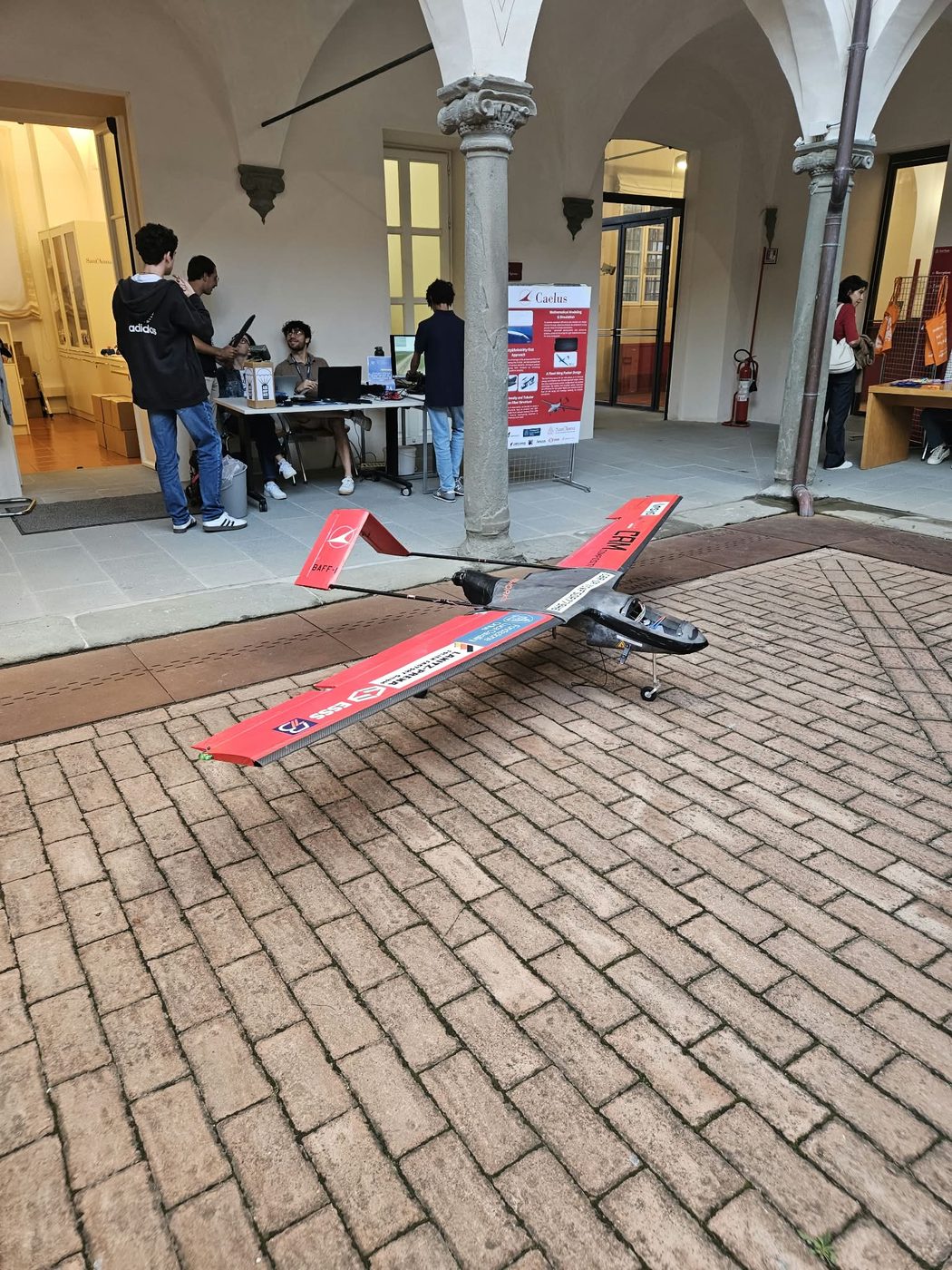
Caelus Baff-1 - Autonomous Fixed-Wing UAV Baff-1
Role
Head of Aerodynamics
Year
2025
Team
10 people
Competition
IMechE UAS Challenge (UK)
Endurance
30 min
Autopilot
ArduPilot

Design, manufacturing and testing of the following year's fully autonomous fixed-wing UAV for the IMechE UAS Challenge, by the same ten-person team. This year I focused on aerodynamic design and stability analysis.

01A-tail pusher configuration
  • Designed the wing, fuselage and A-tail pusher configuration for a new UAV platform.
  • A-tail pusher configuration for better weight distribution and dynamics.
  • Internal payload storage for improved aerodynamics; split flaps and flaperons.
02Composite structure and autonomy
  • Updated lightweight structure: D-box wing with a leading-edge spar.
  • Carbon-fibre and glass-fibre prepreg structure with internal antennas.
  • Fully autonomous flight with ArduPilot, a pitot tube and a lidar ground-height rangefinder, for 30 minutes of continuous operation.
03Parametric simulation framework

Implemented a parametric simulation framework that automates geometry changes, mesh generation and solver configuration. It cut design iteration turnaround time, kept testing consistent across design variants and generated the aerodynamic maps needed for the stability assessment.

Projects › More projects

No.04 Academic · Thesis · Industry · Competition

Moreprojects

  • Type
    Academic
  • Type
    Industrial / Academic
    Year
    2025
  • Type
    Academic
    Year
    2026
    FEM
    8415 rpm
  • Type
    Academic
  • Type
    Competition
    Year
    2023
    Result
    1st place worldwide

01 FEA / ANSYS APDL / Python / Structural Dynamics

Dynamics of an Insulated Rail Joint

Principles of Machine Design with FEM Applications, Sant'Anna School of Advanced Studies

3D transient FE model of a moving Hertzian load on an insulated rail joint, with a Python spectral index that detects end-post failure from a 360 to 330 Hz frequency shift.

Role
Candidate, exam project

Exam project for Principles of Machine Design with FEM Applications, Sant'Anna School of Advanced Studies (Istituto di Intelligenza Meccanica).

01Problem

An insulated rail joint keeps continuous welded rails mechanically continuous while electrically isolated for signalling circuits. A broken insulating end-post causes short circuits, which give false "clear" signals (collision risk) or false "occupied" signals (network blockage). The goal was to reconstruct the strain wave \varepsilon_x(x,t) from strain probes and to detect the failure of the end-post.

02Model
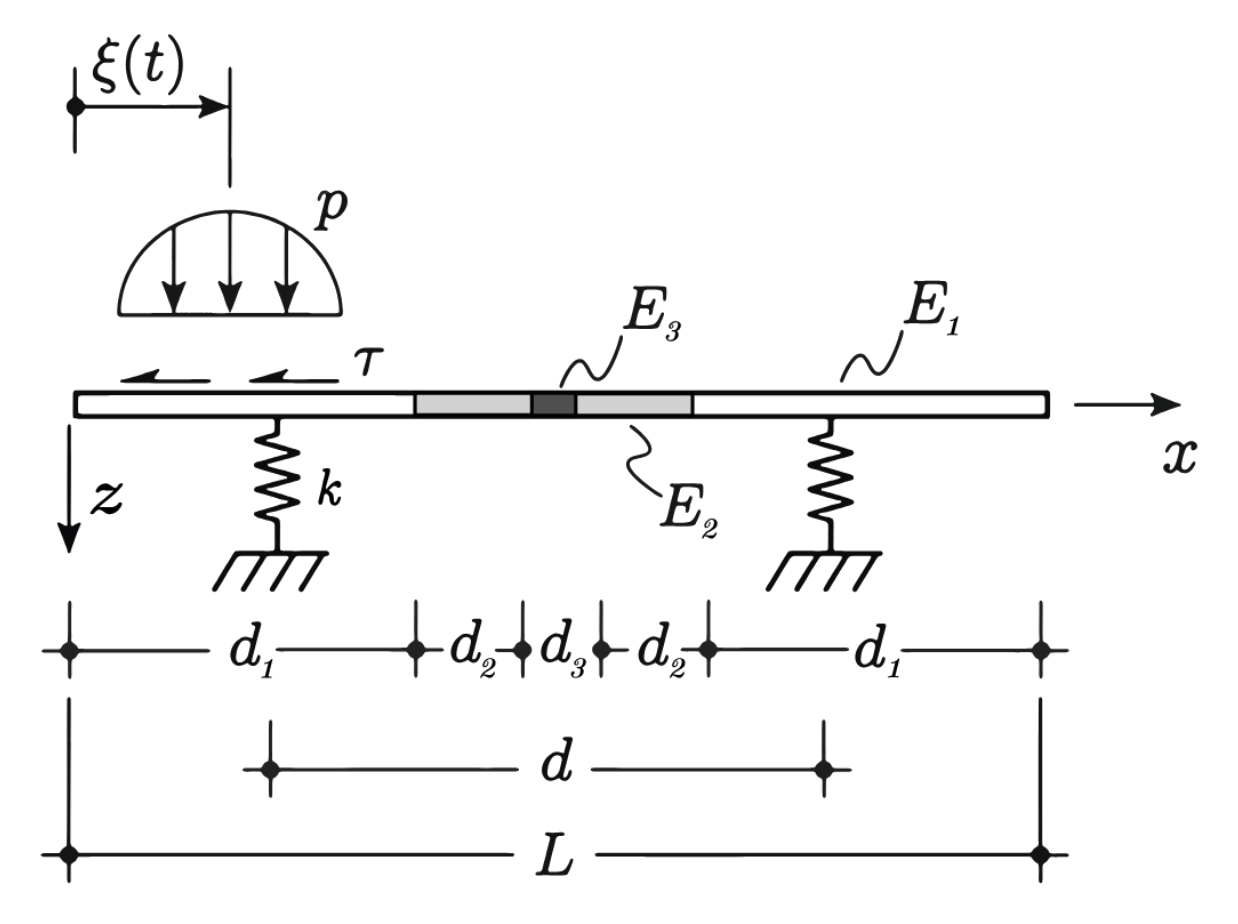
  • Moving Hertzian train load, vertical and longitudinal, on an elastically supported rail with fishplates and an insulating end-post.
  • Geometry partitioned in SpaceClaim so the nodes align exactly with the strain probes. Hex-dominant mesh, refined along the load path to resolve the contact ellipse, with a coarser swept mesh on the rail base.
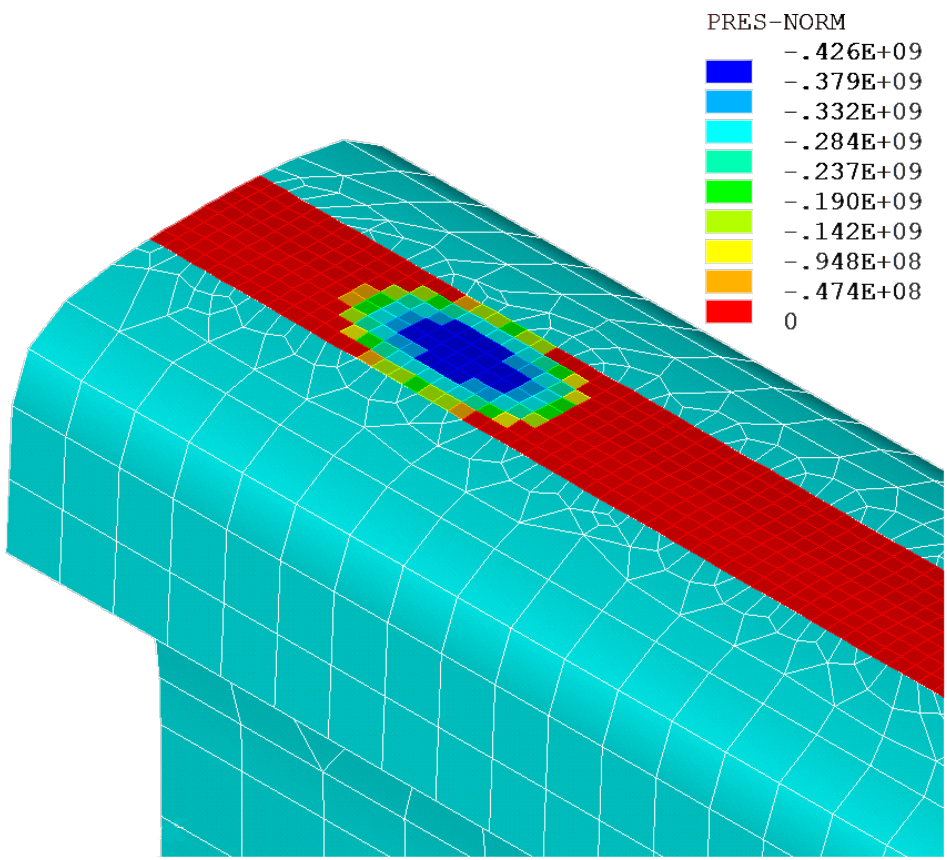
  • Moving load scripted in APDL, since Workbench cannot apply a pressure that varies in space and time. SURF154 surface elements carry the load, with a spatial bounding-box filter to cut the computation. The elastic foundation uses COMBIN14 springs.
  • Linear transient analysis with HHT time integration to suppress numerical noise.
Analytical model: the rail as a beam on an elastic foundation under a moving load, with three stiffness zones at the joint
Moving Hertzian pressure on the SURF154 surface elements of the rail head (APDL)
Mesh of the insulated rail joint
03Verification
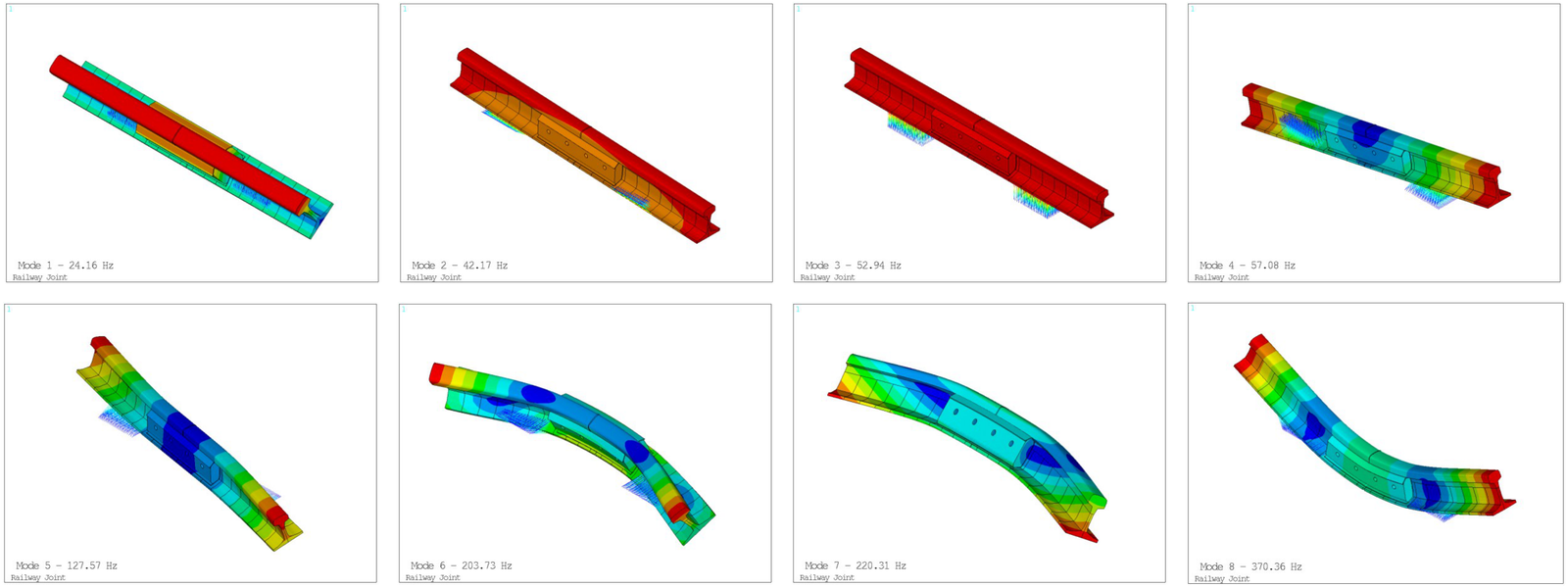
  • Modal analysis: semi-rigid modes first, then local modes. The damaged end-post does not shift the natural frequencies.
  • Successful mesh study: the natural frequencies change by less than 1 Hz between meshes.
First eight mode shapes
04Results
  • Wave reconstruction by cubic spline interpolation in Python. The undamaged and damaged cases differ by about \pm200\,\mu\varepsilon, confined to the fishplate region (\pm0.25 m), where the damaged joint opens and closes like a compliant connection.
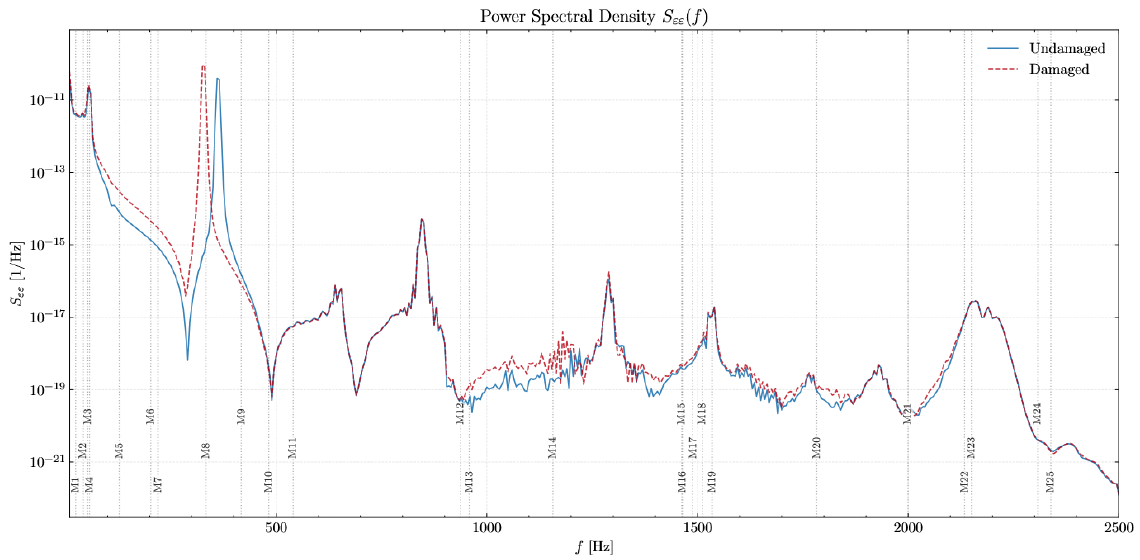
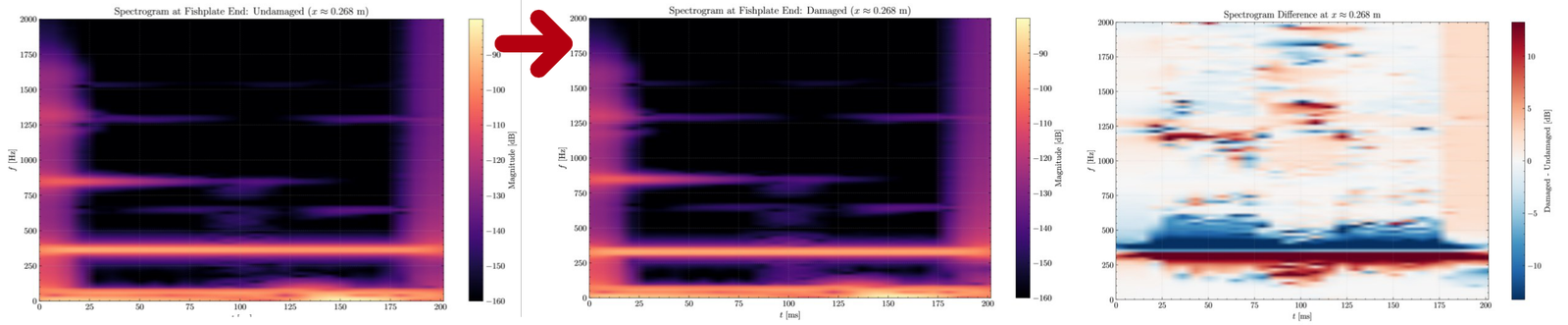
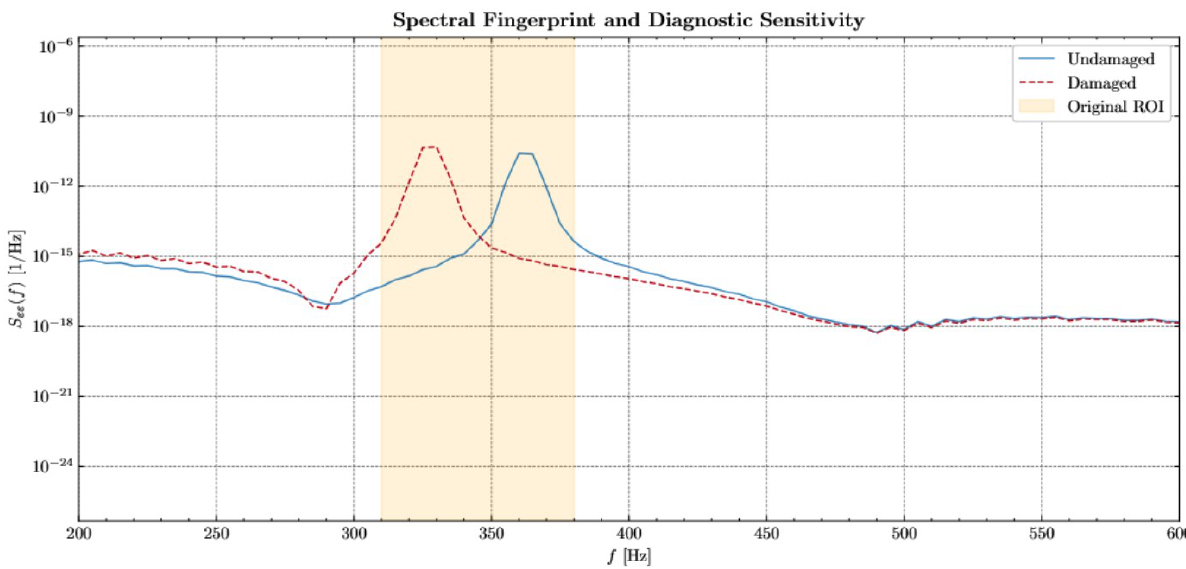
  • Welch power spectral density shows the low-frequency modes unaffected, and a clear shift from 360 Hz to 330 Hz caused by the lost local stiffness. The shift survives normalisation by the load spectrum.
  • A diagnostic index integrates the ratio of the measured to the undamaged strain spectrum over the 310 to 380 Hz band. Values far above 1 flag a broken end-post and lower values partial damage; the band was chosen with a sensitivity analysis on its centre and width.
Reconstructed strain wave: undamaged, damaged and their difference
Welch power spectral density, undamaged and damaged
Spectrograms at the fishplate end: undamaged, damaged and their difference
Spectral fingerprint in the diagnostic band

02 CFD / Star-CCM+ / Rotor Aerodynamics / VTOL

Aerodynamics of a VTOL Rotor

Bachelor's thesis at SkyEye Systems, with the Laboratory of Experimental Aerodynamics, University of Pisa

My bachelor's thesis at SkyEye Systems: hover CFD of the rotor of a large-scale VTOL UAV, run through an automated Star-CCM+ pipeline to select the most efficient configuration.

Role
BS thesis researcher
Year
2025

Bachelor's thesis carried out with SkyEye Systems (project Vertigo), in collaboration with the Laboratory of Experimental Aerodynamics, University of Pisa.

01Study
  • Hover CFD of the rotor in Star-CCM+, comparing airfoils, rotor diameters and pitch angles.
  • The simulation pipeline is fully automated and produces the thrust, torque and power maps across all configurations.
02Result
  • Selected the configuration that meets the thrust requirement with the least power.

03 FEA / Ansys / Siemens NX / Contact Mechanics

Critical Engine Speed in an Engine Connecting Rod

Machine Design, University of Pisa

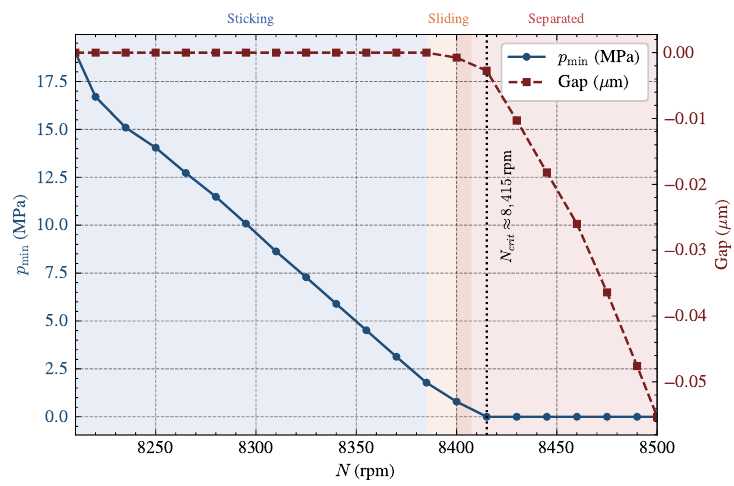
Analytical and nonlinear contact FEA prediction of the engine speed at which inertia loads open the big-end joint of a TVR 3.5 L connecting rod: 8415 rpm by FEM against 8770 rpm analytically.

Role
Project author
Year
2026
FEM
8415 rpm
Analytical
8770 rpm
Difference
4.05%

Machine Design course project, University of Pisa (academic year 2025/2026).

01Problem

For the 3.5 L TVR AJP6 straight-six (350 hp T350 version), find the engine speed N_{crit} at which the tensile inertia load at top dead centre starts to separate the connecting rod from its big-end cap. Separation is defined as zero contact pressure at any point of the interface. The engine was chosen because its original blueprints are public, so the rod was rebuilt from original drawings.

02Analytical model
  • Planar slider-crank at constant speed, with TDC acceleration a\simeq-R\,\omega^2(1+\lambda) and \lambda=R/L=0.2737.
  • Equivalent reciprocating mass of 600 g. Lever effect on the bolts (c=7 mm, e=33.5 mm), plus clamped-section and screw stiffnesses of 863 and 420 kN/mm, so the screws carry a fraction \xi=0.327 of the external load.
  • Separation occurs when the clamping force reaches zero: N_{crit}\simeq8770 rpm.
03FEM model
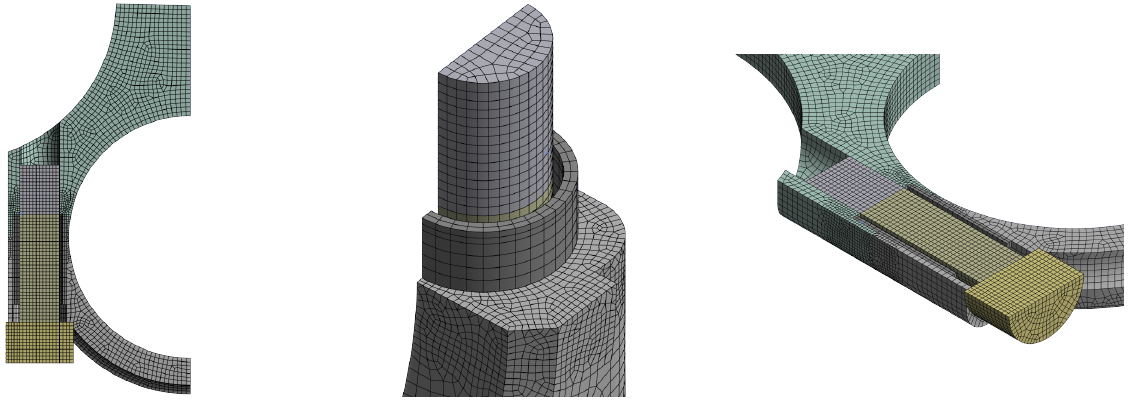
  • Parametric CAD in Siemens NX. Prepared in Ansys SpaceClaim, using a quarter model thanks to two symmetry planes, and partitions that give a conformal, mostly hexahedral mesh with 0.5 mm refinement at the rod-cap contact.
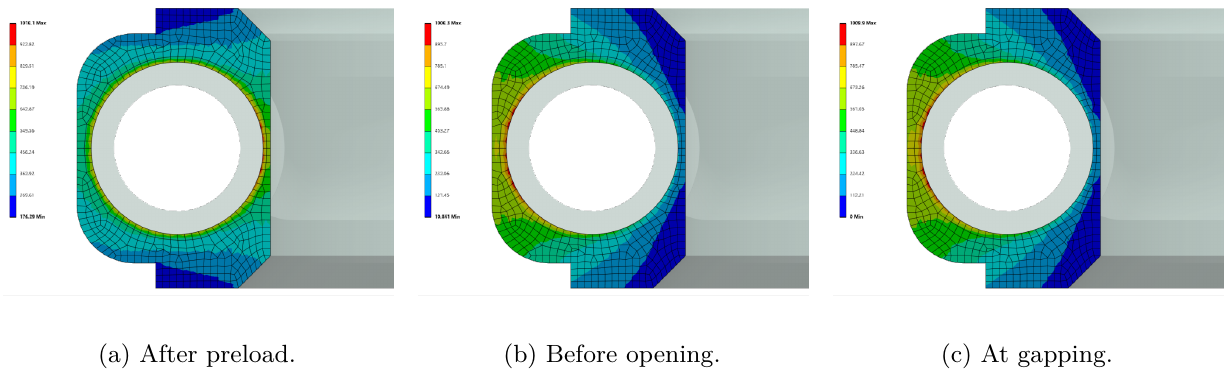
  • Five contact pairs (frictional, \mu=0.2, or bonded). The bolt preload is applied in load step 1, then a MAPDL pseudo-time ramp of the rotational acceleration sweeps the engine speed in load step 2. This finds N_{crit} in a single solve, using minimum contact pressure and contact status as separation criteria.
Quarter model: hex-dominant mesh with refinement at the rod-cap contact
04Results
  • N_{crit,FEM}\simeq 8415 rpm, which is 4.05% from the analytical value.
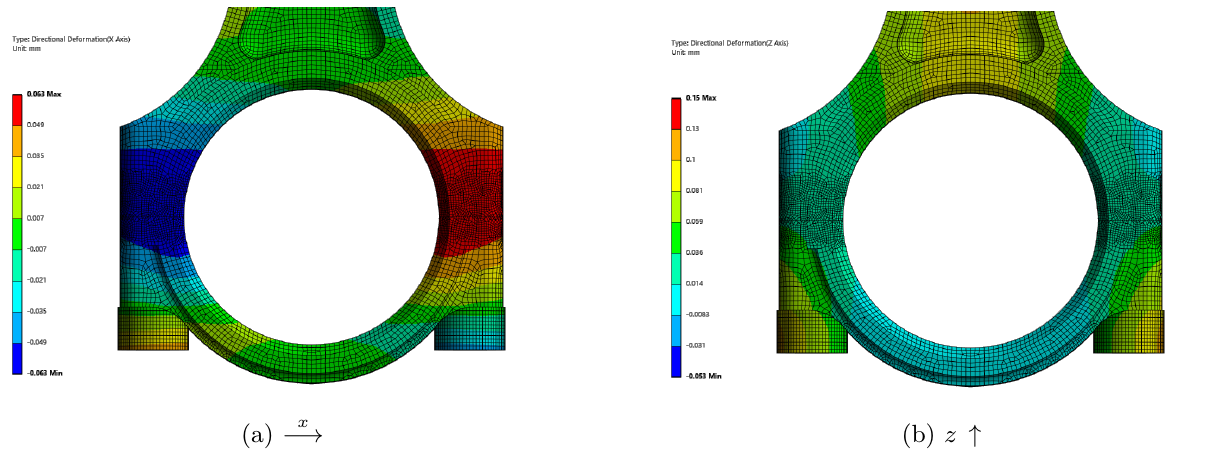
  • The constant-eccentricity assumption is confirmed, since the deformation is 0.06 mm against e=33.5 mm. Neglecting the dowel is also justified: it carries about 0.75 kN, or 2.9% of the inertia load.
  • Mesh independence demonstrated over four global refinements (150%, 100%, 80%, 60%) by solving the whole RPM ramp for each.
  • Future work: dowel interference fit, detailed threads and bearing, full engine cycle, and the crankshaft and crankpin contact.
Minimum contact pressure and gap across the RPM ramp: sticking, sliding, separation
Contact pressure after preload, before opening and at gapping (MPa)
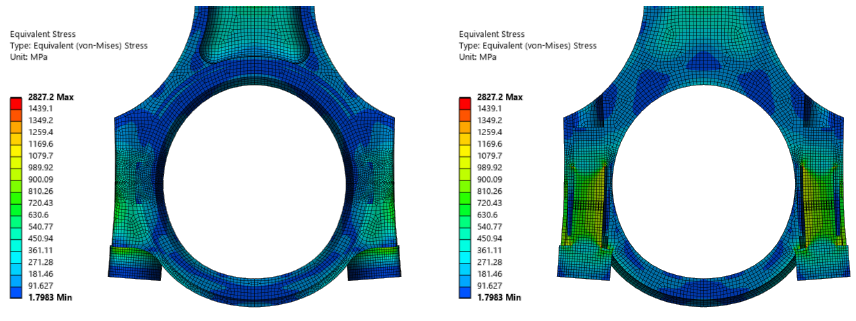
Equivalent von Mises stress (MPa)
Directional deformation at the onset of gapping (mm)

04 CFD / CHT / Star-CCM+ / Turbomachinery

CFD/CHT Analysis of a Compressor Stage

Aircraft Propulsion, University of Pisa

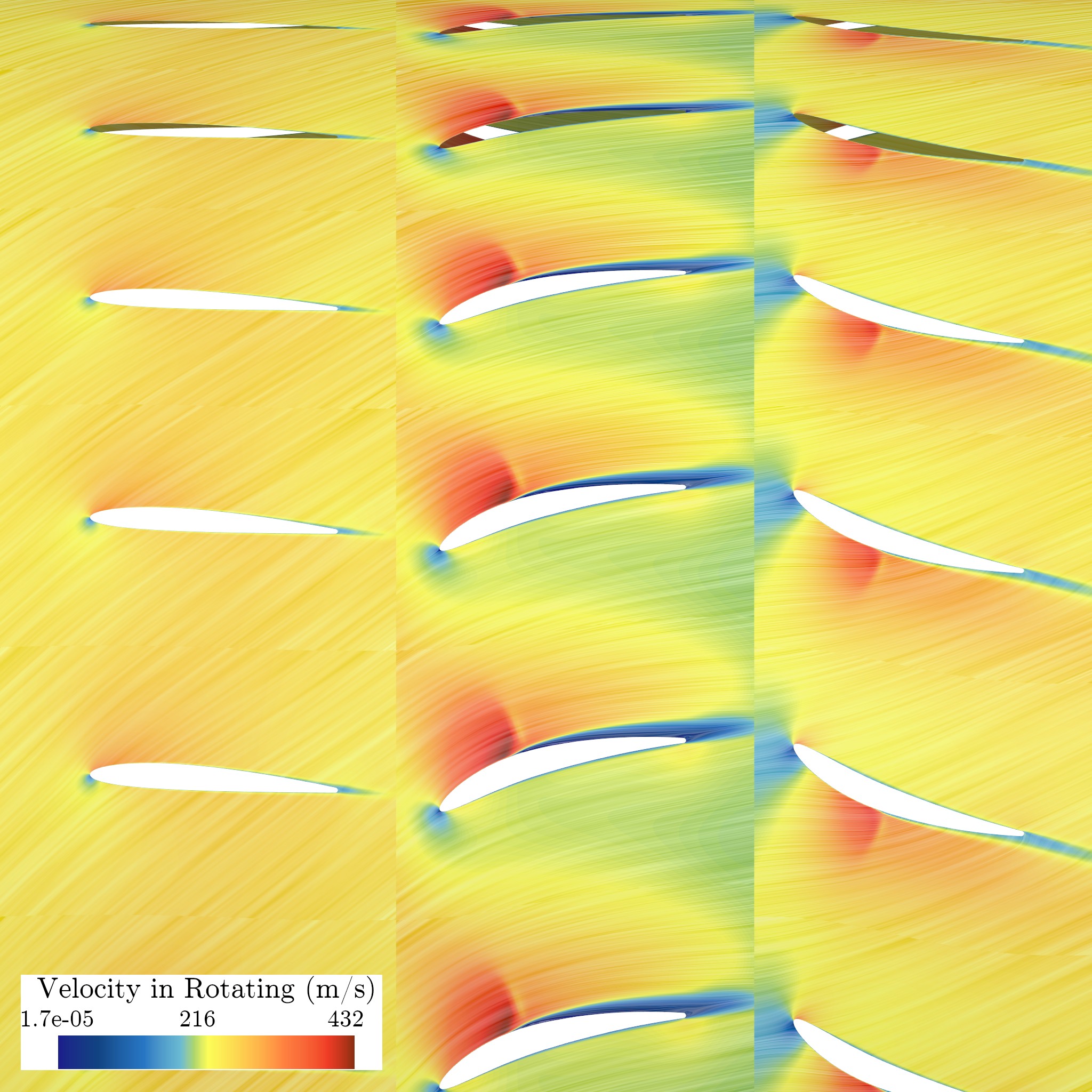
Star-CCM+ CFD and conjugate heat transfer simulations of an axial compressor stage.

Bachelor's coursework project at the University of Pisa.

01Simulation
  • CFD and CHT simulations of an axial compressor stage in Star-CCM+.
  • Turbomachinery meshing of the blade passages, with periodic symmetry so a single passage per row represents the whole annulus.
  • Rotor and stator solved in different rotating reference frames, coupled at the interface between the rows.
Velocity in the rotating frame

05 CAD / Additive Manufacturing / Autonomous UAV

Caelus Quadcopter - IEEE UAV Chase Challenge

Caelus Sant'Anna, autonomous quadcopter team

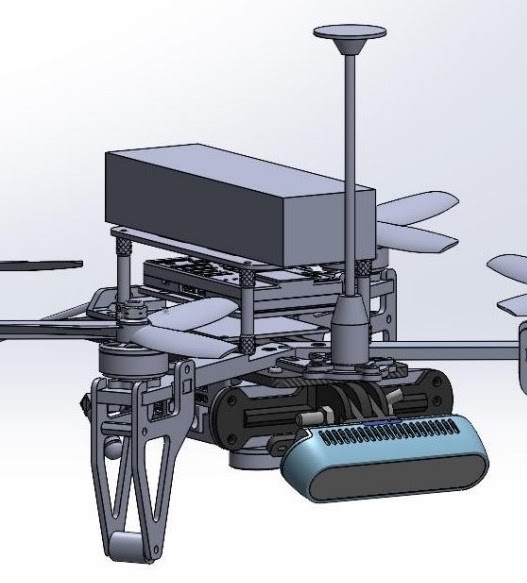
Support structure for the sensor array of the autonomous quadcopter that won 1st place worldwide at the IEEE UAV Chase Challenge 2023.

Role
CAD and Additive Manufacturing
Year
2023
Result
1st place worldwide
Competition
IEEE UAV Chase Challenge, Purdue University (USA)
  • Designed and additively manufactured the support structure for the main sensor array.
  • CAD and additive manufacturing of the support structures for the sensing module, antennas and compute stick, plus battery sizing.

CV

No.05 Curriculum vitae

About

I am a final-year master's student in Aerospace Engineering, dual-enrolled at the University of Pisa and, as an honour student, at the Sant'Anna School of Advanced Studies (admission rate below 5%). I completed my bachelor's degree in less than three years, with 110/110 summa cum laude, in the top 1% of my cohort.

My focus is aerodynamics and numerical methods for CFD, alongside FEM and composite structures, with results checked in the wind tunnel and on track. As Head of Aerodynamics at E-Team Squadra Corse, I overhauled the team's CFD set-up, introduced its first cornering and thermal simulations, and held the design event at Formula Student Germany 2025. Before that, I co-founded the first fixed-wing autonomous UAV team at Sant'Anna.

Education · in progress

  1. 09/2022 - Exp. 11/2027 · Pisa, Italy

    Master's degree, Aerospace Engineering - Analytical and Computational Methods for Engineering

    Sant'Anna School of Advanced Studies

    Honour student on a five-year full scholarship (5% admission rate).

    CourseworkCFD and FEM numerical methods, statistical data analysis, rarefied gas and cold plasma dynamics, autonomous flight, microcontroller programming, signal processing.

  2. 09/2022 - Exp. 11/2027 · Pisa, Italy

    Master's degree, Aerospace Engineering

    University of Pisa

    Grade
    GPA 29.8/30

    Courseworkexperimental aerodynamics, flight mechanics, gas dynamics, control systems, aerospace structures.

Education · completed

  1. 09/2022 - 07/2025 · Pisa, Italy

    Bachelor's degree, Aerospace Engineering

    University of Pisa

    Grade
    110/110 summa cum laude (top 1% of class, GPA 29.53/30)
    Thesis
    Rotor aerodynamics of a large-scale VTOL UAV, with SkyEye Systems and the Laboratory of Experimental Aerodynamics

    Courseworkfluid dynamics, continuum mechanics, aerospace systems, programming.

Experience

  1. 10/2026

    CNC Machining

    Naval defence sector supply chain (undisclosed)

  2. 09/2025 - 09/2026 · Pisa, Italy

    Head of Aerodynamics

    E-Team Squadra Corse (Formula Student)

    • Led a 13-member division to a 13.5% downforce increase, a 16% efficiency gain and a 7.3% higher track score.
    • Battery cooling CFD/CHT, simulation automation, a vehicle dynamics reduced-order model and composite manufacturing.
  3. 10/2024 - 09/2025 · Pisa, Italy

    CFD Engineer

    E-Team Squadra Corse (Formula Student)

    • Cornering simulations and wind tunnel validation; delivered the engineering design presentation at Formula Student Germany 2025.
  4. 04/2025 - 06/2025 · Remote

    BS Thesis Researcher

    SkyEye Systems

    • Bachelor's thesis carried out at SkyEye Systems: CFD of the rotor of a large-scale VTOL UAV, in collaboration with the Laboratory of Experimental Aerodynamics (University of Pisa).
  5. 09/2023 - 09/2025 · Pisa, Italy

    Co-Founder, Aerodynamics Division Manager and Lead Operations

    Fixed-Wing UAV Team, Caelus Sant'Anna

    • Co-founded the team to design and build an autonomous fixed-wing UAV from scratch for the IMechE UAS Challenge (UK).
    • Oversaw aerodynamic design, systems integration and autonomous navigation, coordinating design and manufacturing to tight deadlines.
  6. 01/2023 - 09/2023 · Pisa, Italy

    CAD and Additive Manufacturing

    Autonomous Quadcopter Team, Caelus Sant'Anna

    • Support structure for the main sensor array; 1st place worldwide at the IEEE UAV Challenge 2023 (USA).

Activities

  1. 2025

    Mentee

    LeadTheFuture

    • Among the few Italian STEM students selected as mentees by LeadTheFuture, a leading mentorship non-profit organisation (acceptance rate below 20%).
  2. 08/2022 - Present

    Alumnus

    Accademia Giovani per la Scienza

    • I give talks and presentations to inspire high school students to explore STEM careers.

Awards and certifications

  1. 01

    Academic Excellence Medal

    University of Pisa · 12/2025

    Awarded to graduates with the best academic performance.

  2. 02

    1st place worldwide, IEEE UAV Chase Challenge

    IEEE, Purdue University (USA) · 2023

    CAD and additive manufacturing of the support structures for the sensing module, antennas and compute stick of the Caelus Sant'Anna autonomous quadcopter, plus battery sizing.

    1st place worldwide, IEEE UAV Chase Challenge
    1st place worldwide, IEEE UAV Chase Challenge
  3. 03

    Honour student, five-year full scholarship

    Sant'Anna School of Advanced Studies · 2022

    Admission rate 5%.

  4. 04

    Cambridge C2 Certificate in Advanced English

    Cambridge · 2021

Skills

Domains

  • Computational Fluid Dynamics
  • Finite Element Analysis
  • Conjugate Heat Transfer
  • Aerodynamics
  • Rarefied Gas and Cold Plasma Dynamics
  • Flight Mechanics
  • Composite Structures
  • Autonomous Flight

Technical

  • Statistical data analysis
  • Team and project management
  • Composite materials (structures and layups)
  • Advanced additive manufacturing (FDM, SLM)

Languages

Italian
native
English
C2 Cambridge Advanced
French
conversational
German
basic

Interests

Photography, piano, guitar, university choir, hiking.

SoftwareSheet 06/07

Software

Software, what it is for, and the projects it was used in
No.ToolWhat it is forUsed in
01Star-CCM+ and Java macrosMultiphysics CFD (meshing, RANS, rotating regions, conjugate heat transfer), scripted with Java macros to automate meshing, set-up and post-processing
02XFLR5Low-speed aerofoil and wing analysis: panel method and vortex lattice
03BetaCAE ANSACFD pre-processing: CAD clean-up and surface meshing
04BetaCAE METACFD post-processing and reporting
05ANSYS Mechanical / WorkbenchFinite element analysis: meshing, contacts, static and transient solutions
06ANSYS MAPDL / APDLScripted FE solver for custom loads, elements and load steps
07Ansys SpaceClaimGeometry preparation and partitioning for structured meshes
08Siemens NXParametric CAD
09PX4Open-source autopilot for autonomous flight
ONE:1Coursework: autonomous flight
10ArduPilotOpen-source autopilot for autonomous flight
11ROS2Robotics middleware for autonomous systems
Coursework: autonomous flight
12PythonSignal processing, data analysis and numerical methods
Dynamics of an Insulated Rail JointET-18Coursework: Godunov-type Riemann solver
13MATLABNumerical modelling and dynamics
Coursework: multi-body landing gear dynamics
14CMicrocontroller programming
Coursework: microcontroller programming
15SolidWorksCAD
16FibersimComposite ply design and ply-book generation
17Autodesk Fusion 360 and CAMCAD and CAM toolpaths for CNC machining
Experience: CNC machining (naval defence supply chain)
+AlsoANSYS Fluent · OpenFOAM · ANSYS ACP · 3DExperience CATIA · C++ · Git · Bash
Lorenzo Dalla Rosa2026